Primary Research and Ethical Practices:
The primary research will be used to collect original data that will be collected and used to help create the final image and guide designs.
The aims of this research will be:
- To gain knowledge of horror myths and legends.
- To gain further knowledge on how the creation of the myth Mothman came about.
- To gain knowledge on how Mothman looks from past sightings.
- To see how many people still believe in horror myths.
- To find out if people still picture these horror myths the same as the traditional view of them.
The primary research will be used to bridge gaps and ideas that I will have found within my secondary research and vice versa It will also help me get the publics view on traditional myths from where they're from and worldwide, allowing me to put their views together and create looks incorporating their ideas as well as mine.
Below I have put a video in which helped me to understand why it is important to think about research ethics. It explains research ethics well in a detailed manner:
https://www.youtube.com/watch?v=PGrB3agtiBU
It is important that my research follows the BERA 2024 guidelines as information should be collected in the correct way. Their guidelines should be applied to ensure the readers research is ethical, justifiable and sound. (BERA, 2024). An Ethics form has been completed and sent off to the ethics board with all the questions to be asked and a basic background on what I am going to research, I would know soon if the form has been accepted so I can go ahead with my primary research hopefully at the start of January, if not I will have to amend the form and send it into be assed again in February.
I will be using qualitative and quantitative research within my interview and online questionnaires to collect as much factual and informative data as possible. Below will be my gatekeeper and permission form, and questions for the interview as well as my questionnaire for social media which contains all this information!

Figure 1: interview questions (Rutter. Charlie, 2025)
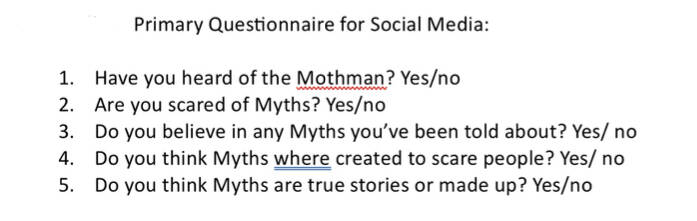
Figure 2: Online Questionnaire questions (Rutter. Charlie, 2025)

Figure 3: Permission form and Gatekeeper Form (Rutter. Charlie, 2025)
References:
British Educational Research Associations (2024). Ethical Guidelines for Educational Research, Fifth Edition (2024). [online] www.bera.ac.uk. Available at: https://www.bera.ac.uk/publication/ethical-guidelines-for-educational-research-fifth-edition-2024. [Accessed 15 Oct. 2025]
Research Tube (2023). Understanding Research Ethics: Principles and Practices [Video-3]. YouTube. Available at: https://www.youtube.com/watch?v=PGrB3agtiBU. [Accessed 15 Oct. 2025]
Figures:
Figure 1: interview questions (Rutter. Charlie, 2025) York, York College
Figure 2: Online Questionnaire questions (Rutter. Charlie, 2025) York, York College
Figure 3: Permission form and Gatekeeper Form (Rutter. Charlie, 2025) York, York College
Create Your Own Website With Webador